Porque quiero REVERTIR MI DIABETES...




Shoelson, S. E., Lee, J., & Goldfine, A. B. (2006). Inflammation and insulin resistance. The Journal of Clinical Investigation, 116(7), 1793–1801. https://doi.org/10.1172/JCI29069
Pradhan, A. D., Manson, J. E., Rifai, N., Buring, J. E., & Ridker, P. M. (2001). C-reactive protein, interleukin 6, and risk of developing type 2 diabetes mellitus. JAMA, 286(3), 327–334. https://doi.org/10.1001/jama.286.3.327
de Luca, C., & Olefsky, J. M. (2008). Inflammation and insulin resistance. FEBS Letters, 582(1), 97–105. https://doi.org/10.1016/j.febslet.2007.11.057
Oguntibeju, O. O. (2019). Type 2 diabetes mellitus, oxidative stress and inflammation: Examining the links. International Journal of Physiology, Pathophysiology and Pharmacology, 11(3), 45–63. https://pmc.ncbi.nlm.nih.gov/articles/PMC6628012/
Monnier, L., Mas, E., Ginet, C., Michel, F., Villon, L., Cristol, J. P., & Colette, C. (2006). Activation of oxidative stress by acute glucose fluctuations compared with sustained chronic hyperglycemia in patients with type 2 diabetes. JAMA, 295(14), 1681–1687. https://doi.org/10.1001/jama.295.14.1681
Hanssen, N. M. J., Kraakman, M. J., Flynn, M. C., Nagareddy, P. R., Schalkwijk, C. G., & Murphy, A. J. (2020). Postprandial glucose spikes, an important contributor to cardiovascular disease in diabetes? Frontiers in Cardiovascular Medicine, 7, 570553. https://doi.org/10.3389/fcvm.2020.570553
Saisho, Y. (2014). Glycemic variability and oxidative stress: A link between diabetes and cardiovascular disease? International Journal of Molecular Sciences, 15(10), 18381–18406. https://doi.org/10.3390/ijms151018381
Stratton, I. M., Adler, A. I., Neil, H. A. W., Matthews, D. R., Manley, S. E., Cull, C. A., Hadden, D., Turner, R. C., & Holman, R. R. (2000). Association of glycaemia with macrovascular and microvascular complications of type 2 diabetes (UKPDS 35): Prospective observational study. BMJ, 321(7258), 405–412. https://doi.org/10.1136/bmj.321.7258.405
Lean, M. E. J., Leslie, W. S., Barnes, A. C., Brosnahan, N., Thom, G., McCombie, L., Peters, C., Zhyzhneuskaya, S., Al-Mrabeh, A., Hollingsworth, K. G., Rodrigues, A. M., Rehackova, L., Adamson, A. J., Sniehotta, F. F., Mathers, J. C., Ross, H. M., McIlvenna, Y., Stefanetti, R., Trenell, M., … Taylor, R. (2018). Primary care-led weight management for remission of type 2 diabetes (DiRECT): An open-label, cluster-randomised trial. The Lancet, 391(10120), 541–551. https://doi.org/10.1016/S0140-6736(17)33102-1
Lean, M. E. J., Leslie, W. S., Barnes, A. C., Brosnahan, N., Thom, G., McCombie, L., Peters, C., Zhyzhneuskaya, S., Al-Mrabeh, A., Hollingsworth, K. G., Rodrigues, A. M., Rehackova, L., Adamson, A. J., Sniehotta, F. F., Mathers, J. C., Ross, H. M., McIlvenna, Y., Welsh, P., & Taylor, R. (2019). Durability of a primary care-led weight-management intervention for remission of type 2 diabetes: 2-year results of the DiRECT open-label, cluster-randomised trial. The Lancet Diabetes & Endocrinology, 7(5), 344–355. https://doi.org/10.1016/S2213-8587(19)30068-3
Lean, M. E. J., Leslie, W. S., Barnes, A. C., Brosnahan, N., Thom, G., McCombie, L., Kelly, T., Irvine, K., Peters, C., Zhyzhneuskaya, S., Hollingsworth, K. G., Adamson, A. J., Sniehotta, F. F., Mathers, J. C., McIlvenna, Y., Welsh, P., McConnachie, A., McIntosh, A., Sattar, N., & Taylor, R. (2024). 5-year follow-up of the randomised Diabetes Remission Clinical Trial (DiRECT) of continued support for weight loss maintenance in the UK: An extension study. The Lancet Diabetes & Endocrinology, 12(4), 233–246. https://doi.org/10.1016/S2213-8587(23)00385-6
Lim, E. L., Hollingsworth, K. G., Aribisala, B. S., Chen, M. J., Mathers, J. C., & Taylor, R. (2011). Reversal of type 2 diabetes: Normalisation of beta cell function in association with decreased pancreas and liver triacylglycerol. Diabetologia, 54(10), 2506–2514. https://doi.org/10.1007/s00125-011-2204-7
Riddle, M. C., Cefalu, W. T., Evans, P. H., Gerstein, H. C., Nauck, M. A., Oh, W. K., Rothberg, A. E., le Roux, C. W., Rubino, F., Schauer, P., Taylor, R., & Twenefour, D. (2021). Consensus report: Definition and interpretation of remission in type 2 diabetes. Diabetes Care, 44(10), 2438–2444. https://doi.org/10.2337/dci21-0034
Shukla, A. P., Iliescu, R. G., Thomas, C. E., & Aronne, L. J. (2015). Food order has a significant impact on postprandial glucose and insulin levels. Diabetes Care, 38(7), e98–e99. https://doi.org/10.2337/dc15-0429
Shukla, A. P., Dickison, M., Coughlin, N., Karan, A., Mauer, E., Truong, W., Casper, A., Emiliano, A. B., Kumar, R. B., Saunders, K. H., Igel, L. I., & Aronne, L. J. (2019). The impact of food order on postprandial glycaemic excursions in prediabetes. Diabetes, Obesity and Metabolism, 21(2), 377–381. https://doi.org/10.1111/dom.13503
DiPietro, L., Gribok, A., Stevens, M. S., Hamm, L. F., & Rumpler, W. (2013). Three 15-min bouts of moderate postmeal walking significantly improves 24-h glycemic control in older people at risk for impaired glucose tolerance. Diabetes Care, 36(10), 3262–3268. https://doi.org/10.2337/dc13-0084
Reynolds, A. N., Mann, J. I., Williams, S., & Venn, B. J. (2016). Advice to walk after meals is more effective for lowering postprandial glycaemia in type 2 diabetes mellitus than advice that does not specify timing: A randomised crossover study. Diabetologia, 59(12), 2572–2578. https://doi.org/10.1007/s00125-016-4085-2
Spiegel, K., Knutson, K., Leproult, R., Tasali, E., & Van Cauter, E. (2005). Sleep loss: A novel risk factor for insulin resistance and type 2 diabetes. Journal of Applied Physiology, 99(5), 2008–2019. https://doi.org/10.1152/japplphysiol.00660.2005
Broussard, J. L., Ehrmann, D. A., Van Cauter, E., Tasali, E., & Brady, M. J. (2012). Impaired insulin signaling in human adipocytes after experimental sleep restriction: A randomized, crossover study. Annals of Internal Medicine, 157(8), 549–557. https://doi.org/10.7326/0003-4819-157-8-201210160-00005
Joseph, J. J., & Golden, S. H. (2017). Cortisol dysregulation: The bidirectional link between stress, depression, and type 2 diabetes mellitus. Annals of the New York Academy of Sciences, 1391(1), 20–34. https://doi.org/10.1111/nyas.13217
Yaribeygi, H., Maleki, M., Butler, A. E., Jamialahmadi, T., & Sahebkar, A. (2022). Molecular mechanisms linking stress and insulin resistance. EXCLI Journal, 21, 317–334. https://doi.org/10.17179/excli2021-4382
Willi, C., Bodenmann, P., Ghali, W. A., Faris, P. D., & Cornuz, J. (2007). Active smoking and the risk of type 2 diabetes: A systematic review and meta-analysis. JAMA, 298(22), 2654–2664. https://doi.org/10.1001/jama.298.22.2654
Lally, P., van Jaarsveld, C. H. M., Potts, H. W. W., & Wardle, J. (2010). How are habits formed: Modelling habit formation in the real world. European Journal of Social Psychology, 40(6), 998–1009. https://doi.org/10.1002/ejsp.674






DR. GERARDO OCHOA
Médico, con doble especialidad en Anestesiología y Medicina Cardiovascular.
Especializado en Medicina Funcional, Nutrición y Gastronomía.
Considerado uno de los mayores expertos en reversión de diabetes tipo 2 en toda América Latina.
Ayudando a mas de 14.800 diabéticos en todo el mundo a revertir su diabetes y controlar sus cifras de glucosa.
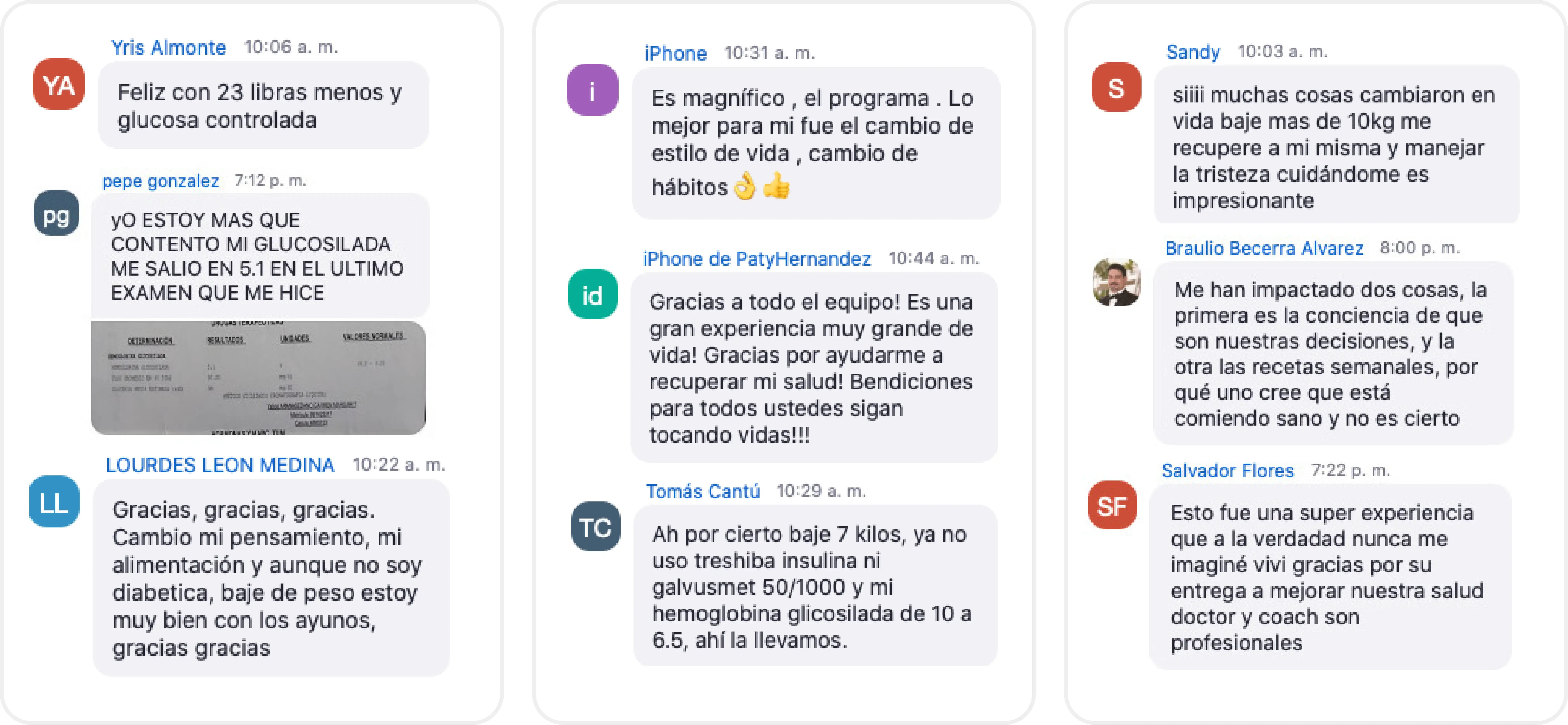
Los resultados de los participantes de “MÉTODO GLUCOSA EN BALANCE“ son fruto del esfuerzo, disciplina, compromiso y tiempo dedicado al programa.
La responsabilidad de conseguir resultados similares a los de los casos expuestos en esta página, es tuya y no podemos asegurarte el éxito.
El contenido de nuestro programa está protegido por derechos de autor y dirigido a personas mayores de edad.
Las historias y testimonios de éxito que se presentan, se proporcionan únicamente con fines ilustrativos.
No se ofrece garantía expresa o implícita de resultados. Si actualmente estás siendo tratado por un médico u otro profesional de la salud, es recomendable seguir sus indicaciones y complementar con este programa.
© BE WELLY 2026. Todos los derechos reservados.